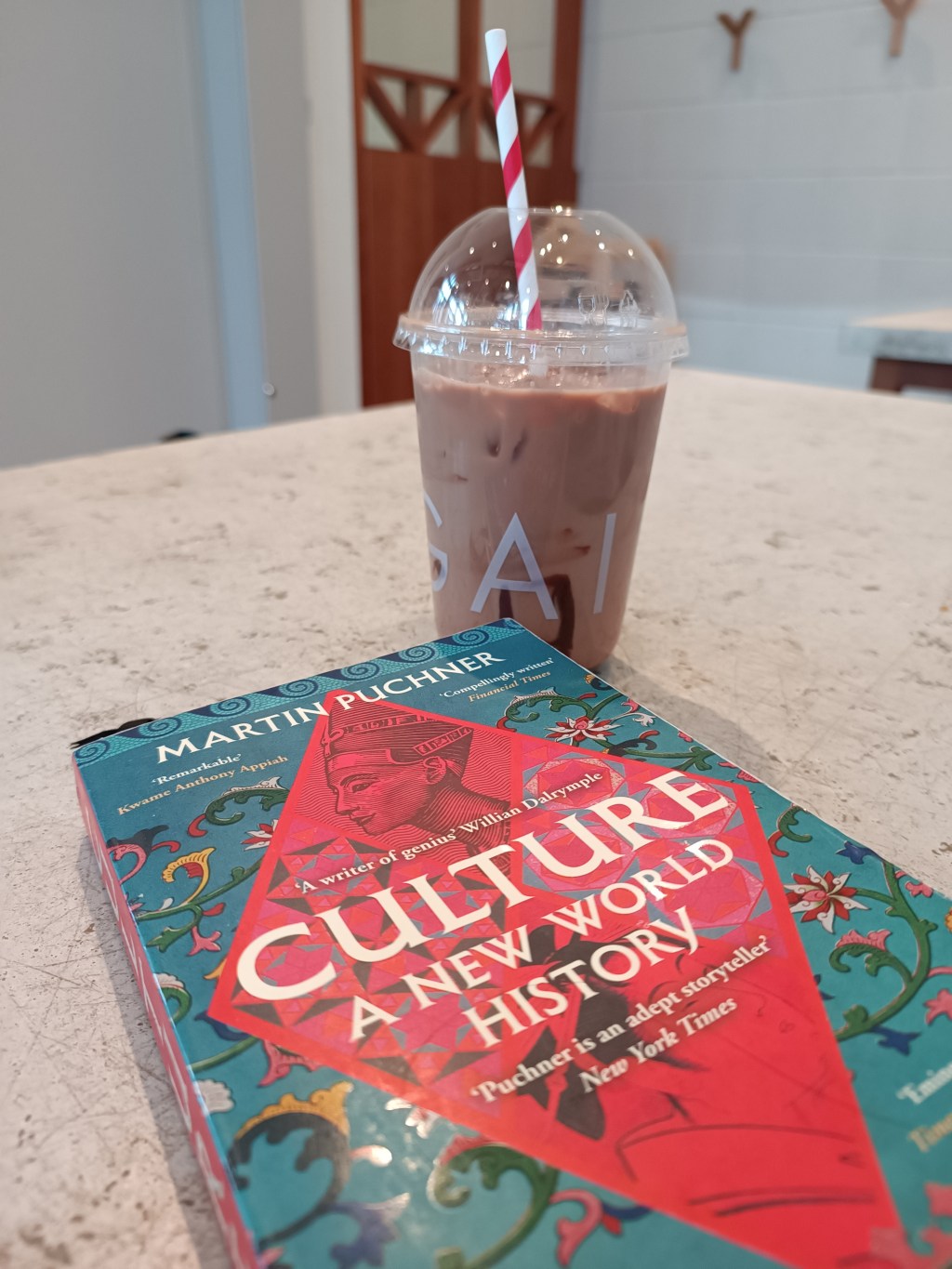
It was when I was browsing through the bookshops in London, that the title ‘Culture: A New World History’, peaking out between two ancient history books on the shelf, caught my eye. We do say don’t judge the books by their cover, but I must admit that the ethnic artistically detailed book cover instantly heightened my curisoity.
Somehow, when I picked up this book, it surprised me that the author whole heartedly supported the concept of an international universal culture. I don’t where such surprise came from, perhaps it was because I was new to considering different outlooks on culture or maybe it was because the book cover looked too ethnic to suggest an intermarriage of cultures whilst simultaneously eluding the grievances of cultural appropriation in history. Or maybe, it was simply, that coming from a country which has undergone immense cultural appropriation supporting absolute cultural internationalism seems shortsighted.
All this while, since I started my legal journey in 2019, my primary perception of culture and its ownership has been quite black and white regarding the inherent ownership of a culture. Matters of cultural appropriations and rights of communities and nations over their cultural identity and heritage is something I believed to be intrinsic to the very people of that culture since their existnace. As often said, a culture is alienable from its people right?
2024 was the year where I engaged most with the theory of a “Culture of All Mankind.” Over my one year in the LLM, I engaged with various theoretical papers and discussions, of which quite a few veered towards the approach of a universal culture as opposed to a community or nation’s right over its culture.
Despite my personal misgivings of a blanket adoption of cultural internationalism, Martin Puchner paints a multicultural legacy of our history woven through time with various charcters emerging as champions of cross cultural evolution. He presents an all together new dynamic view of our ancestors, who learned from each other and incorporated what they found the best in different cultures to create a beautiful life for the present and future generations. It is heartning to read about instances where individuals have acted as transmittors of cultures, a chapter that jumps out at me right now is where we see the spread of Buddhism in Asia and how that invoked curiosity amongst various cultures to understand each other.
In fact, while reading, I particulary enjoyed his analysis on the contrast between the cultural exchange of Greece and Rome over the other cultural exchanges in times of conquest. Here, he claims that the Romans remained as one of the scarce few dynasties which respected and borrowed from the culture it bested, i.e., the Greeks and then incorporated elements of it to amplify their own culture.
It has been a while since I read the book and when I read it again, for I am sure I will, I am also prepared that I might have another view point regarding this topic. See, that is the beauty of it. Every time you reread these various dynamics of cultures across the world, your own life’s culture to that date will make you interpret it in a diffrerent manner. I’m quite excited for that now!
Today, in this all connected world, where geographical borders don’t stop us from interacting with each other, I do believe that exposure and the chance to particpate in cultures other than your own is important for all of us. Can you imagine a world where we never met knew people, only homgenous identities all around- it would be like eating the same dish at all meals throughout your life- doesnt sound very interesting or fun does it? However at the same do I agree with all those who suggest a nation should not aim to own its culture, that its restrictive and hampers international growth? Not completely.
I think it’s important to realise that while Martin Puchner’s book supports cultural internationalism, most of his instances or characters seem to be scholars or individuals who seek to undergo a cultural journey and celebrate the sharing and borrowing of multicultures. That is hardly the case in most matters of cultural ownership and appropriation conflicts of the past. Most communities or nations are so protective of cultural identities and practices, only because they have suffered from the loss of it in the past. They do not strictly aim to exclude anyone from their culture, it is just a presumptive defence ingrained from the previous misrepresentations and loots of that heritage. It would only be a better world if we could recognise and acknowledge the same so that the marriage of cultures is something all of us can look forward to.
Despite its varied reviews I found the book to be a wonderful and informative read which allowed me to make my own quirky observations in the margins of it. Martin Puchner writes invitingly and his words allow us a vivid glimpse into our past. I was very glad to have picked it out at the store that day!
 StorieswithKritika
Leave a comment