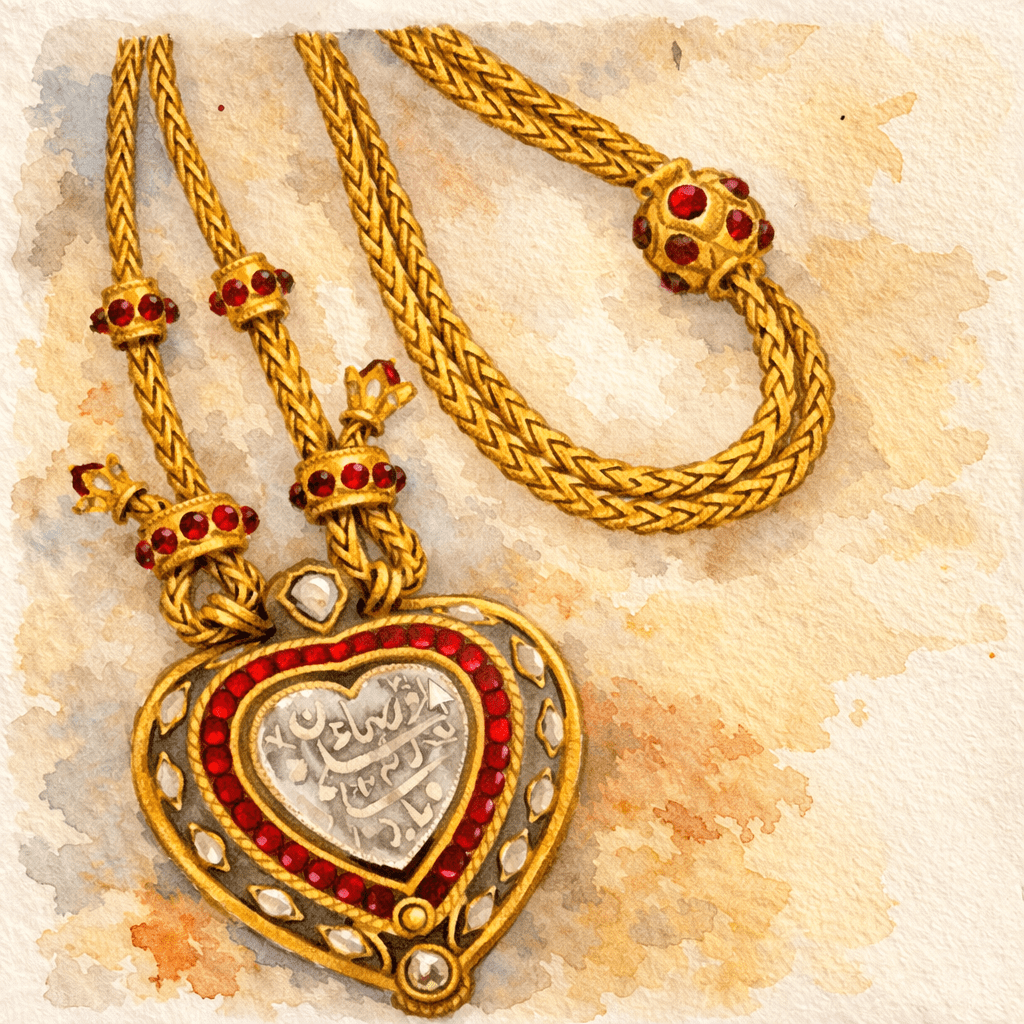
If you’ve been keeping up with the media, entertainment or fashion press recently, I think it would be easy for you to infer the incident I refer to in my heading.
In lieu of the upcoming cinematic adaptation of the tension dripping classic ‘Wuthering Heights’, Margot Robbie has been breaking charts for her fashion looks across carpets. I was, but naturally, drawn to write about the controversy that took place at the LA World Premiere circling the ‘Taj Mahal Necklace’, or as the world calls it, “Elizabeth Taylor’s Heart Necklace”.
In her interview, Margot chose to attribute the ownership of the necklace to Elizabeth Taylor and glossed over the historic origin of this neckpiece- a gift from the Mughal Emperor Jahangir to his beloved wife and Empress, Nur Jahan. Her statement made waves in social media – from news channels to independent influencers lauding the Iconic $ 8.8 million worth Elizabeth Taylor Necklace.
I will say that it was a fleeting statment at the carpet- where, admittedly, Margot did say the necklace had a lot of romantic history and for her culturally Elizabeth Taylor is more relevant. So, it doesn’t seem like her faux pas was intentional or malicious in nature.
However, when you’re at the position to carry global influence, it is especially ironic to overlook the original ownership of the necklace- that too when the name of the said owner is engraved into the diamond you’re wearing. As noted from multiple sources, the necklace features an inscription ‘Love is everlasting‘ including Nur Jahan’s name, her title “Lady of the Padshah,” and the regnal year 23, which corresponds to around 1627–28 AD.
A singularly powerful woman, Nur Jahan to date holds an incomprable position amongst the mughal queens- the only one to have coins issued her name and weilded supreme political authority as the de facto ruler during her husband’s reign.
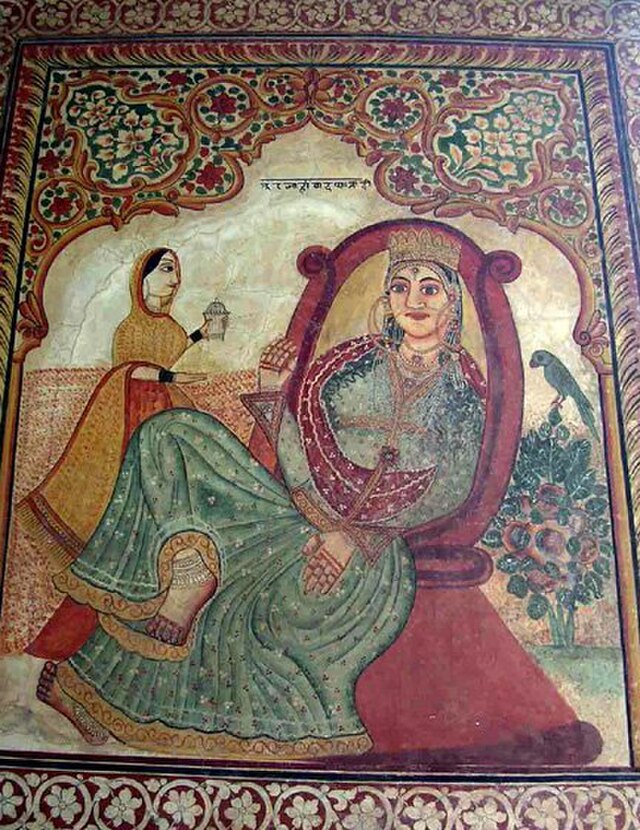
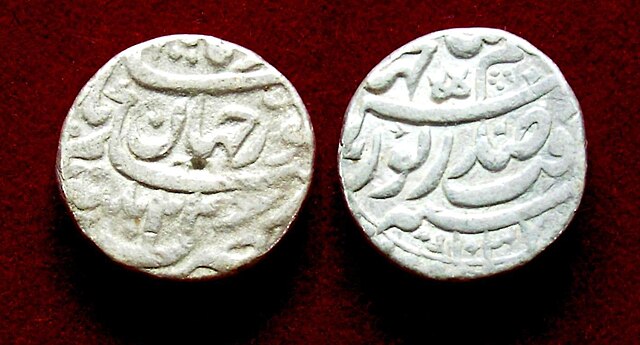
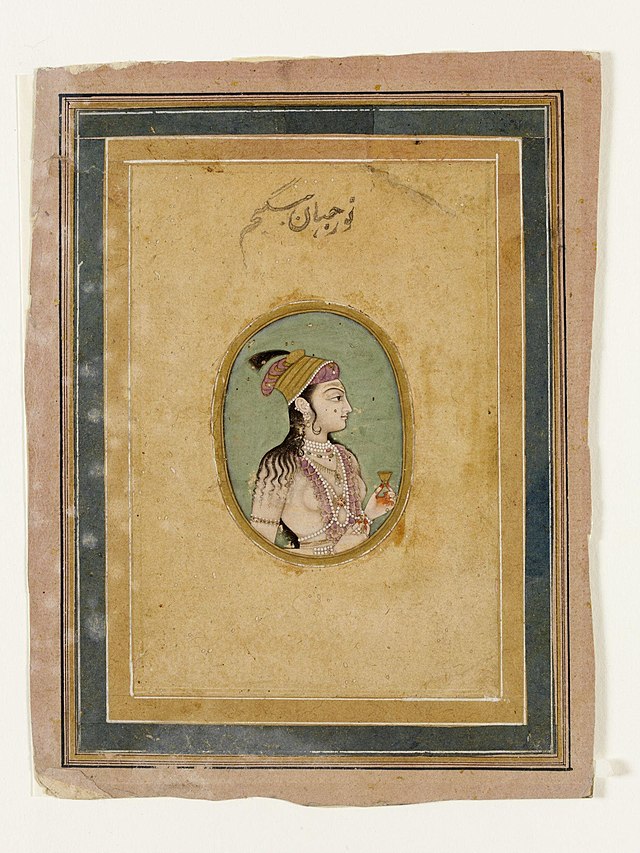
Murals and Painting of Empress Nur Jahan and the coins minted in her name.
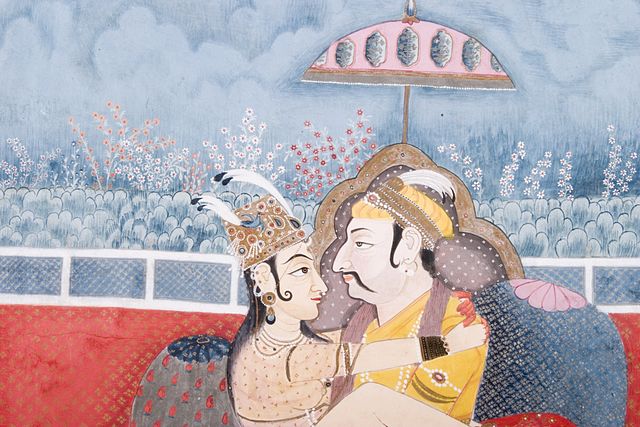
Nur Jahan and Jahangir depicted in love
This necklace transferred ownership to Jahangir’s Son Shah Jahan who gifted it to his cherished wife, Mumtaz Mahal- in whose honour the awe inspiring Taj Mahal was erected. Hence, deriving its nickname the ‘Taj Mahal Necklace’.
From India to Cartier?
As far as I have come to understand, the removal of the necklace from India is most likely attributed to the infamous loot of Mughal treasures in the 1730s from Delhi by the Persian ruler Nadir Shah- an event well known for stripping India of the mystical peacock throne (As a kid I was pretty convinced the throne was a myth. Nope! Then in law school I wrote a paper on it- so turns out- very real indeed).
Post the death of Nadir Shah, these treasures sacttered globaly through covert channels with many of these artefacts and jewels landing in Europe, Russia and the United Kingdom.
It is later recorded to have been acquired by Cartier in 1971 and subsequently purchased by Richard Burton for Elizabeth Taylor in 1972. Interestingly, despite Taylor’s approach to wearing it as a modern piece of jewellery, she is known to have acknowledged and appreciated its Mughal history, specifically it’s ties to Nur Jahan.
The necklace also carries with it the legacy of one of the most prominent lawsuits regarding authenticty of historical/cultural artefacts and their provinance.
What I find so undeniably unique in this necklace is that the inscriptions on it ensure that the origin and history of it is documented over the passing milleniumns/ the rising and falling dynasties. This is a rarity in most cultural artefact surfacings.
As someone who takes keen interest in culture, I find that borrowing multiculturally is never a bad thing- how else would we evolve and understand each other- but, misrepresenting cultures or erasing their history is not respectful. If you will step out on international platforms wearing significant cultural heritage on your person, I think it is only fair that you update yourself on it’s significance- it brings accountability and educates both present and future generations on important historical impacts that were minimized in the past.
A few days ago, I came across a post by an Indian jewellery brand that stated: “India creates history- The World Owns It“, and it resonated, Why? because this was not an isolated incident. From bindis/dupattas to high income/luxury accessories Indian heritage has been overlooked/misrepresentated/appropriated in different ways. I will not really get into that history in this post or I fear this post will definitely spiral down the rabbit hole.
Though, I’ll say in the recent years, Cartier has become somewhat known for loaning Indian origin jewellery to Western Celebrities while denying the same to Indian ones. Sounds awkward right?
A recent controversy occured when Punjabi icon Diljit Dosanjh debuted the 2025 Met Gala, adorned in historic and culture prestige, paying homage to the Maharaja of Patiala. It was well known fact that the styling team had requested Cartier for the Patiala necklace ( a piece of unmatched oppulance with 2930 diamonds and weighing 1000 carats) to complete Diljit’s ensamble. A request that was denied – citing reasons in line with the necklace being sealed inside the museum and unavailable for loan.
What highlights this controversy is the irony that in 2022, Emma Chamberlein had gathered major publicity for wearing the choker part of the very same Patiala necklace on the Met Gala Carpet that year. A loan that was strictly denied to Diljit three years later.
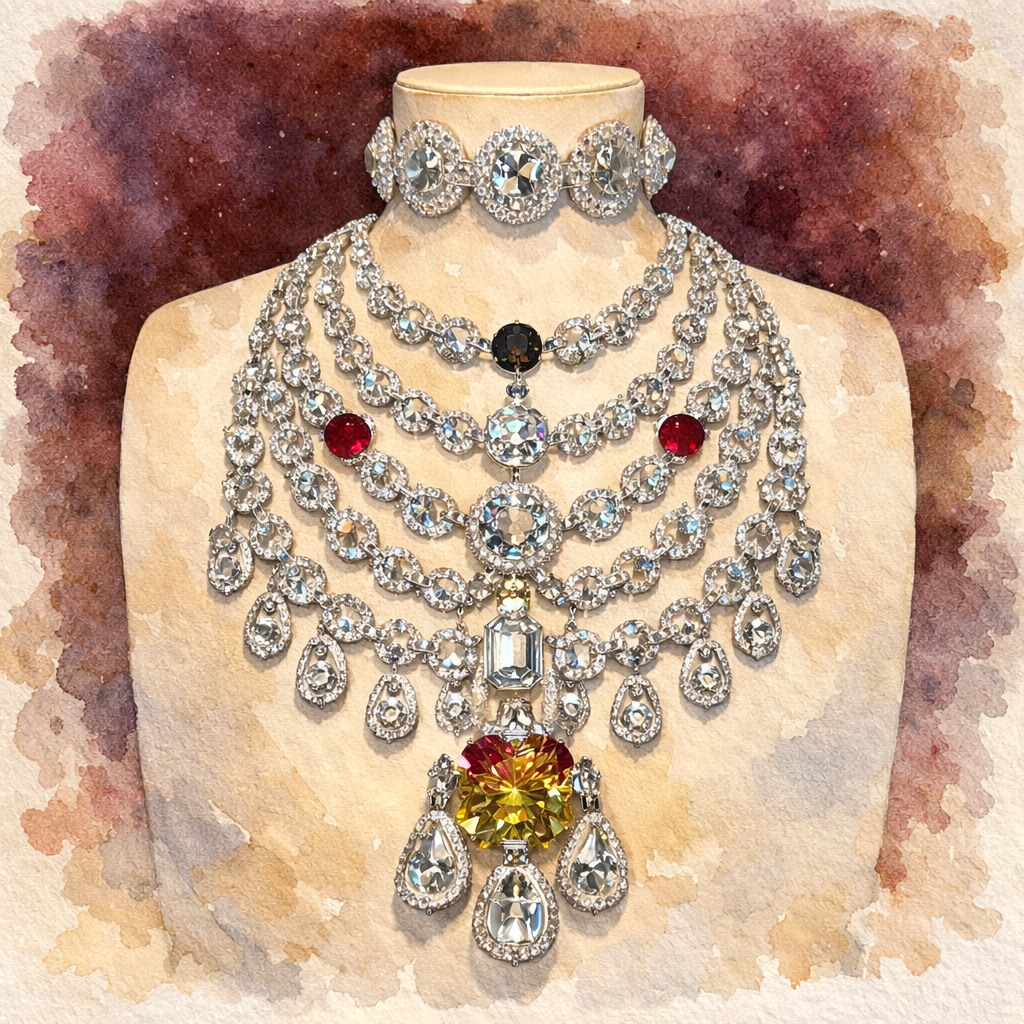
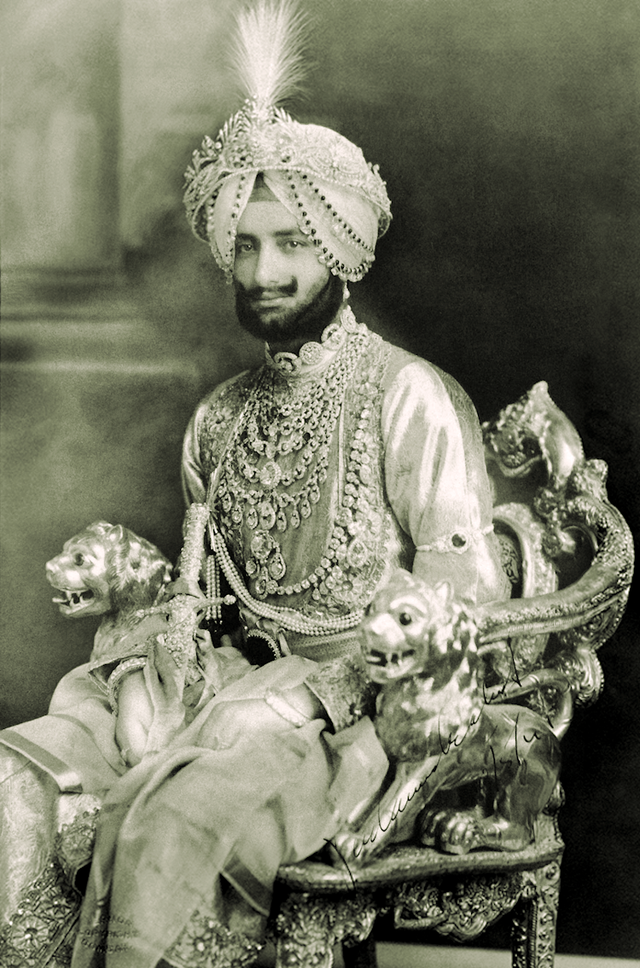
Left to Right: A watercolour illustration of the world famous ‘Patiala Necklace’; A photo of Maharaja Yadavindra Singh of Patiala circa 1930s, wearing the ‘Patiala Necklace’
Why deny one and not both ? Moreover, Diljit’s costume echoed cultural history- yet we have no rational explanation as to why a western celebrity wore the symbol of history while its cultural ascendant was denied the same.
It sort of makes you wonder just how far and in how many ways cultural heritage loss can be experienced. How many cultural artefacts were transferred out of their origin countries in undocumented and unkown ways – and then what about of those which weren’t as significant as such above mentioned ones. How do we trace their ownership/ their history? If we cannot trace their origin or creator they automatically become orphan artefacts/works. Then how do we protect heritage through such undocumented loss?
The salt in the wound just seems to be then how these artefacts get represented in media, more often than not, erasing cultural ties to communities and nations who still mourn their loss.
Perhaps it’s time to be a bit more aware of the heritage of what we represent and how we do it. In today’s socially concious world, it’s not just careless but oft-times inexcusable to erase cultural identity, whether done unknowingly as well.
But till then, I’ll be here, just trying my best to contribute awareness in my own way!
Credits: The mural and painting depicting Nur Jahan belong to public domain and are taken from wikimedia commons; the coins of Nur Jahan belong to Drnsreedhar1959 under the licnese: https://creativecommons.org/licenses/by-sa/3.0/
The Embrace of Nur Jahan and Jahangir and the Maharaja of Patiala photos are from wikimedia commons and belong in public domain.


 StorieswithKritika
Leave a reply to Vedika Cancel reply