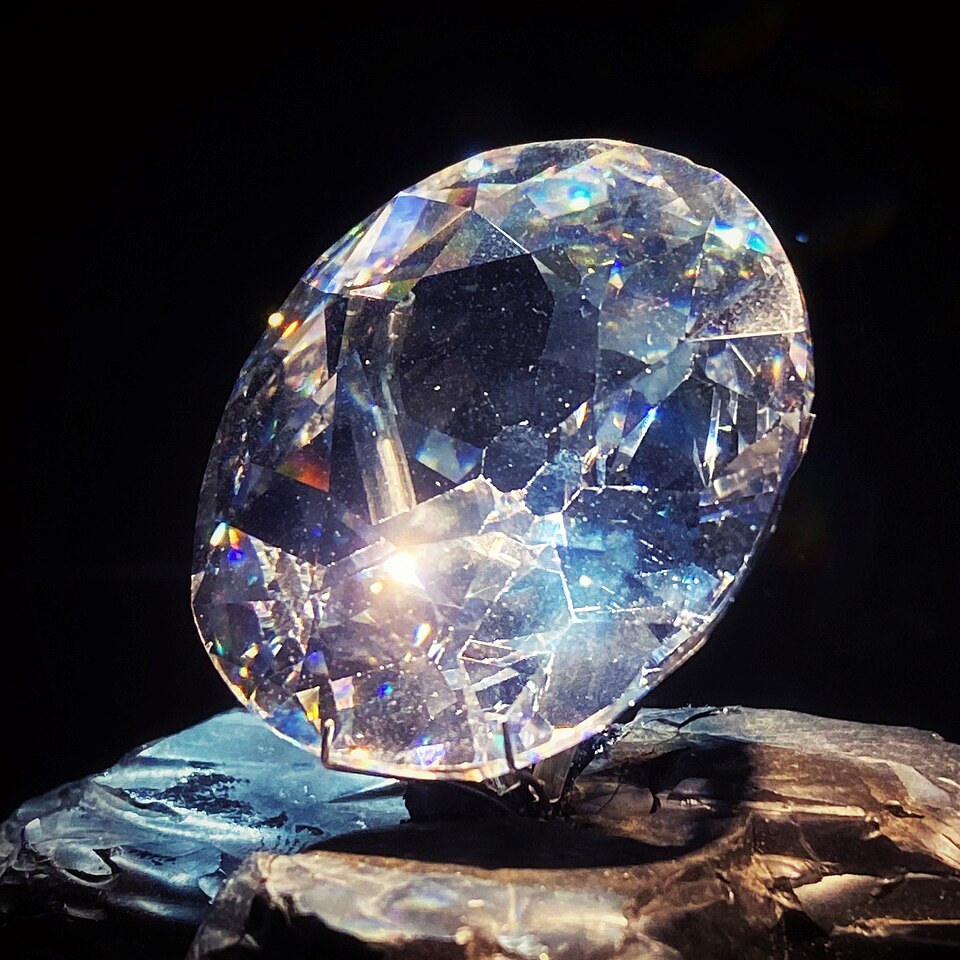
When I started this blog, the rediscussion on the Koh-i-noor had become a hot topic in media, but I seem to be publishing it now, which is months after such media talks. That said, the Koh-i-noor is an evergreen cultural study debate, so anytime is as good as any!
When it comes to spoils of the British Empire, there is no little shortage of them in the British museum and treasury- From the Parthenon Marbles to the Rosetta Stone and to the many more heritage artefacts decorated in today’s London, the need to address repatriation of cultural artifacts has become an increasing global phenomenon.
A while ago in media, Zohran Mamdani, reopened the hastily stitched wound of the Koh-i-noor Diamond. Translated as the ‘mountain of light‘, the 105.6 carat crowning jewel of Britain’s actual crown jewels masquerades as a symbol of colonial power imbalance, the repatriation of which remains a question on the lips of every Indian worldwide.
For me, the Koh-i-noor has become a bridge to reaching the people surrounding me. As a country where repatriation and illicit trade of cultural property in the legal dimension is just starting to develop, I find talking about the acquisition and subsequent actual ownership of this diamond to be the easiest way to explain my legal career path to all those around me- after all it’s quite understandable when you say- the return of the Kohinoor and how law can help facilitate it and you know what- it resonates! Why?
Well, the answer is so very simple. The colonial history of the Koh-i-noor’s acquisition has made it very clear that the “legal and valid” ownership of this diamond by the British Empire remains embroiled in grey ambiguity of law as well as morality.
It was in the reign of Maharaja Duleep Singh that the British acquired the Koh-i-noor. Following the annexation of Punjab in 1849, the surrender of this jewel of India became part of the infamous Treaty of Lahore, whereafter it was presented to Queen Victoria. Known as the Boy-King, Maharaja Duleep at the time was 10 years of age.
It is upon this reliance of the legal terms of the Treaty of Lahore, the British Government today maintains the valid ownership of the Koh-i-noor. Well, I’ll say there is one glaring issue at the heart of this acquisition- A treaty signed by a minor King under the rule of colonial power that governs the law and administration of its colony is certainly not independent of any conflict or undue influence; in fact I’d say the influence is alot more explicit. It is a consent acquired under duress. Any ambiguous consent, that too when engineered under such an asymmetric power relationship, is no consent at all. In today’s moral standards where colonial imperialism is well recognised for its anti humanitarian nature, do we conveniently forget the power imbalance a colonial system inherently invokes? Do we forget that the ruler who surrendered an artefact that embodied India’s power and prestige was merely 10 years old?
Do we consider what was valid then, equally valid today? If we endorse injustice of the past, do we hope for a more evolved future?
The repatriation of the Koh-i-noor has been a much debated issue and the requests for its returns have been ongoing since India’s independence in 1947. However, unsurprisingly, UK has refused to return it, citing the reasons of legality of the transfer under the Lahore treaty and the multi jurisdictional ownership claims of Iran, Afghanistan and Pakistan conflicting with India’s claims as well.
I’ve already discussed the challenges with the surrender of the diamond in the Lahore treaty. An extremely important fact remains that a few years before such treaty, when Maharaja Duleep was 8 years of age- the First Anglo Sikh war was won by the East India Company, resulting in the Maharaja becoming a nominal ruler advised by the Council of Regency that displaced his mother as Regent. Ergo, the few years later signed treaty of surrender seems to lack a suggestion of indepenent thought on behalf of the Maharaja. If we declare such treaties valid, perhaps the definition of consent requires a revisit under international human rights standards.
As for the conflict of multi jurisdictional claims, as it is in most cases of the time of kingdoms and conquests, the relocation of cultural assets was a common thing. The Koh-i-noor is no exception to this rule. The provenance of the Kohinoor begins in the Kollur mines of Andhra Pradesh in the 13th century under the Kakatiya dynasty whereafter it passed through successive Delhi Sultanate Dynasties, ultimately falling in the hands of Babur- who mentioned it in his memoir, Baburnama. The Koh-i-noor then remained with the Mughal Dynasty for 200 years, reaching its crown placement in the peacock throne of Shah Jahan.
It is in the infamous loot of Nadir Shah in 1739 that the Koh-i-noor was stolen from India and is believed to have remained in Persia till 1747, when, upon Nadir Shah’s assassination it came to be possessed by one of his generals and consequently remained in the possession of the Durrani dynasty in Afghanistan. It is in 1813, that the Koh-i-noor returned to India through Maharaja Ranjit Singh.
Despite the many lands the Koh-i-noor has resided in, it is a widely accepted fact that this diamond was mined in India- so its origin country -would be India and no other. Origin- as a term means where something is sourced or begun from. On that ground alone, India establishes a much stronger claim than the other nations. Moreover, the Koh-i-noor was acquired by the British from India – not Afghan, not Persia (Iran), so the reparations and restitution of such loss belong to India. Furthermore, India is not a country of ancient culture where its people no longer associate their history with their current society. It is a living, breathing culture which inherits its history and culture with each passing generation. Koh-i-noor remains and will remain as a pinnacle of cultural loss for all generations past, present and future.
Sharing the Kohinoor?
It has been recently noted that UK and India were in talks to share the Koh-i-noor. What exactly does sharing the Koh-i-noor imply? Do we have joint ownership, is this ownership inclusive of possession- would the Koh-i-noor return home for a time in lieu of this ownership- If India agrees to share the Koh-i-noor, does the UK government consider itself absolved from the repataration owed from such artefacts initial and continuing loss?
Considering history, I do think even the suggestion of such model is a step forward, yet there is much to be consider, for example- why now? is it the Global pressure, is it India’s recent repatriation activities? Is this the new world order- do we share cultural heritage and in doing so do we address past grievances as well?
Just some questions to think about.
I have not yet read the entirety of what such shared custodianship model suggests, so there is definitely a chance of a follow up post – where I will discuss how such shared ownership and its implications would work in today’s global landscape.
As a student of cultural studies, I want to understand what’s the best way to build the way forward? Do we return these cultural items (that itself has become a complex process- matters of preservation , access to all and identity of the source culture all demand a balance)– is that the goal or do we first wait for the much needed acknowledgment of the loots our cultures suffered? I’ve recently started researching on justice that extends beyond just law- transitional justice- and I think in matters such as human rights (cultural heritage loss is definitely there), grounding the way forward through this form of justice is important. The recognition of such loss and injustice lies there. To first admit and accept how our history has caused cultural heritage losses is a much needed step in seeking justice.
Honestly, I can probably write much more on this subject, but I’m afraid then I will be firmly in research article category. So, that’s it from me, but I would love to hear other views from ever
The cover photo of the Koh-i-noor diamond in this article is from Wikimedia Commons by Aiva under the license: https://creativecommons.org/licenses/by/2.0/


Leave a Reply